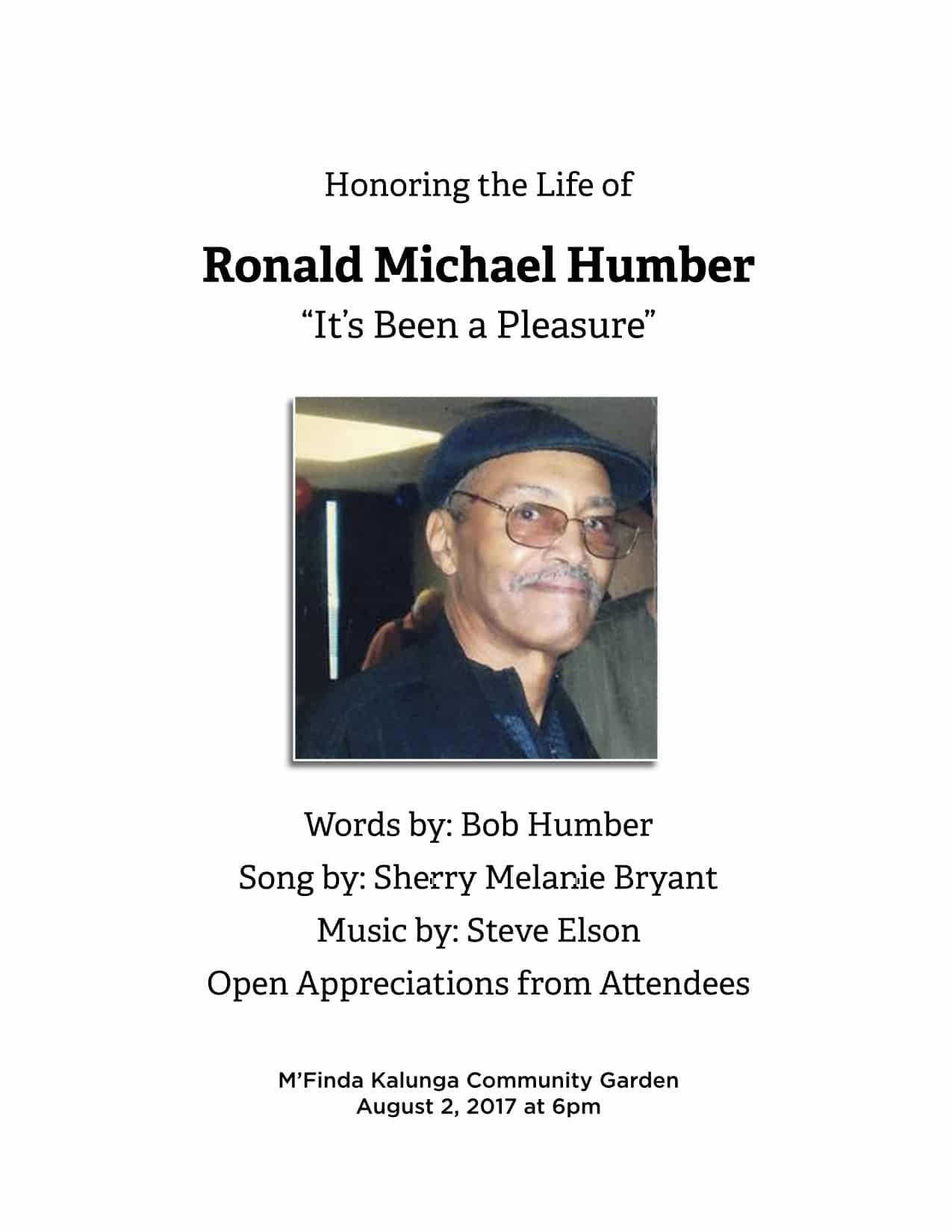
Memorial for Ronald Michael Humber – Despite the Rain
Heartfelt Condolences to the family. Many thanks to all who came. Beautiful words, music and song.
“It’s Been a Pleasure”
For more photos see M’Finda Kalunga Garden!
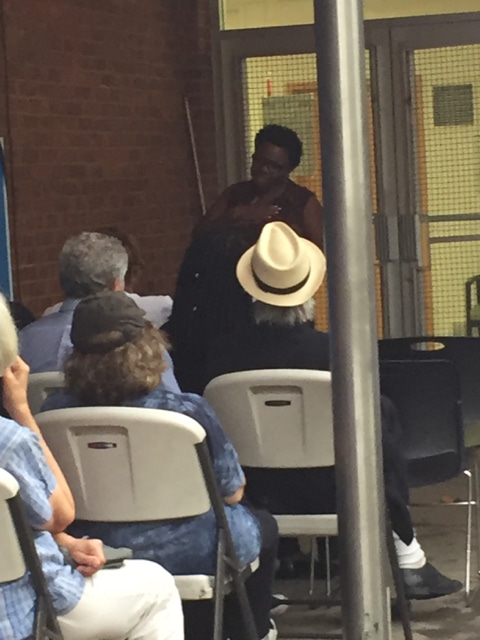



Heartfelt Condolences to the family. Many thanks to all who came. Beautiful words, music and song.
“It’s Been a Pleasure”
For more photos see M’Finda Kalunga Garden!
City Lab: When gentrification Meant Driving Hogs Out of Manhattan:
“Irish pig farmers…German gardeners, .. the African-American settlement of Seneca Village, worked and lived on the land that’s known today as Central Park. Most of their homes were destroyed in the 1860s to create the park.”

Catherine McNeur: Taming Manhattan: Environmental Battles in the Antebellum City.

…Its parks and public spaces were, in large part, funded by fees that the wealthy paid in the hope of creating a place where bourgeois ladies could stroll unbothered by those of lower status.
…Central Park…“the lungs of the city”…creation was fraught with class and racial fallout. The homes of many poor immigrants who survived by processing trash, as well as the thriving African-American settlement of Seneca Village, were seized through eminent domain and destroyed to create a manufactured pastoral landscape…
Many of the underlying conflicts in McNeur’s riveting, meticulously researched account resonate strongly in the New York of today, where deepening economic inequality is fraying the ideal of a prosperous city that can be shared by all its residents: where the churning real estate market is constantly displacing the less wealthy; where rich neighborhoods get pristine parks and poor ones get cracked asphalt…
“[T]he increasingly tamed city privileged one group’s vision for the city and its environment, while amplifying environmental and economic disparity” …”
Photos are available on The Museum of the City of New York‘s online collection
Two GreenThumb Gardens have existed in Sara Roosevelt Park. Both were begun in the early 1980’s when this area was full of burned out buildings, drug dealers and pimps lining Forsyth Street. Garden creation was key in building and anchoring communities and pushing back threats or harm to neighbors. The people did it while creating beautiful oases of flowers, birds, trees, fish, frogs, turtles, chickens and community.
We are currently reminding GreenThumb of one of those early contributors to the safety and beauty of this neighborhood officially established in 1994 as The Forsyth Garden Conservancy now the New Forsyth Garden Conservancy as well as the Hua Mei Bird Sanctuary Bird Owners. Garden’s Rising website.

From NYTimes:
“Sometimes when you arrive in a new place, you don’t have a network you can tap into for support,” Mr. LoSasso said. “By joining a community garden, you’re joining a network of neighbors who are coming from diverse backgrounds who can help new members of their community to get settled.”
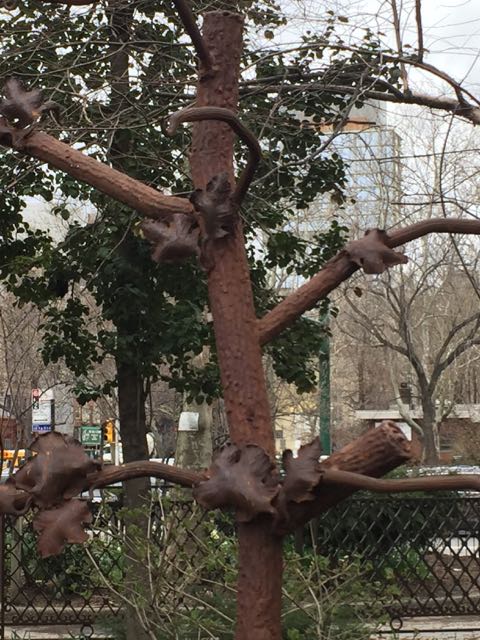
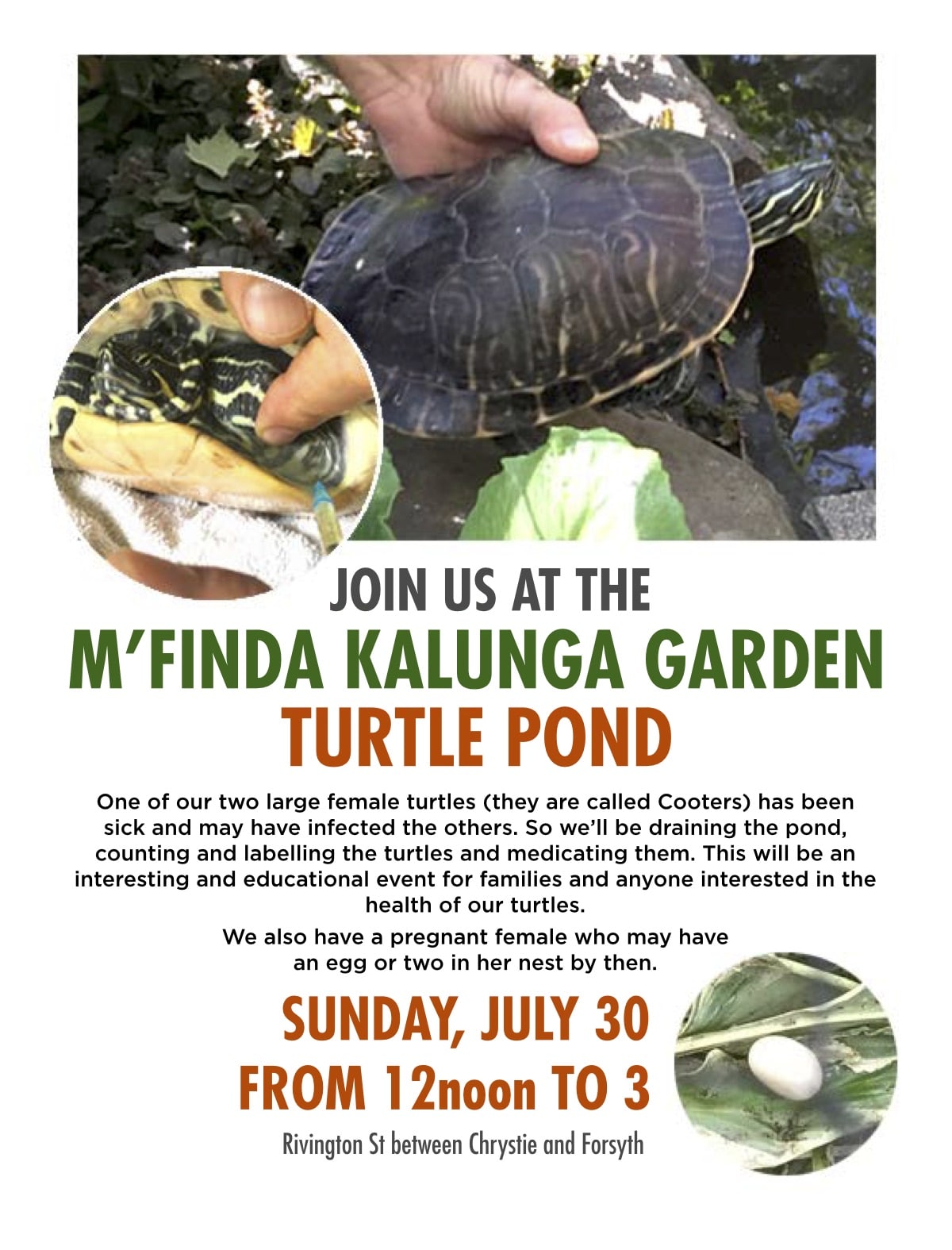
Photos of Ted and Richard at their turtle jobs!
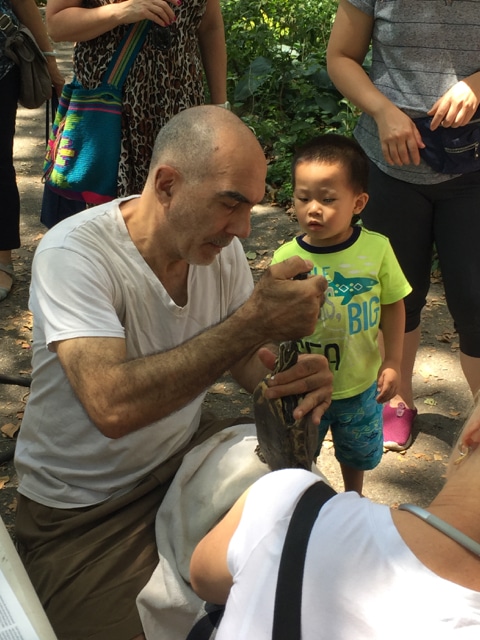

photos Steve Elson
In our never ending quest to find new ideas to tackle issues we’ll post different solutions and suggestions. We can’t leave things as they are. It isn’t working for anyone. – SDR Coalition
From Community Solutions:
Too often, communities view homelessness as an intractable problem or one that is prohibitively expensive to resolve. In reality, we know what it takes to end homelessness, and research has demonstrated that it costs less to do so than to leave people on the streets, where they cycle through expensive, publicly funded emergency services.
Community Solutions has successfully helped hundreds of communities to address homelessness throughout the United States and internationally, through efforts like our groundbreaking 100,000 Homes Campaign, which helped participants move more than 105,000 homeless Americans into permanent housing in under four years.
We work to end homelessness and the conditions that create it. We do it by helping communities become better problem solvers, so they can fix the expensive, badly designed systems that our most vulnerable neighbors rely on every day.
We work to end homelessness and ensure poverty never follows families beyond a single generation.
We think the way to achieve those goals is to help communities become better, more adaptive problem solvers so they can tackle complex challenges as they emerge. As teams learn to work differently and rethink their existing resources, they find that they can help far more people escape homelessness and poverty than they once knew.
Our problem solving process is rooted in five key principles:
 Focus on the outliers – those people or neighborhoods most likely to fall through the cracks of existing social welfare programs- to build better solutions for everyone
 Set measurable, public, timebound goals to build a sense of urgency and force key players to innovate

Engage the user – those trapped in poverty, along with frontline health and human services workers- to design more practical, better informed solutions
 Optimize existing resources by using all available data to inform decisions about spending and community responses to need

Test and evaluate new ideas in short cycles to learn what works quickly and build on successful strategies
Noted across from the handball courts at Grand Street by one of the Park’s many volunteer gardeners and a bird caregiver – Elizabeth Hardwick who wrote: “She is a baby Red Tailed Hawk.”
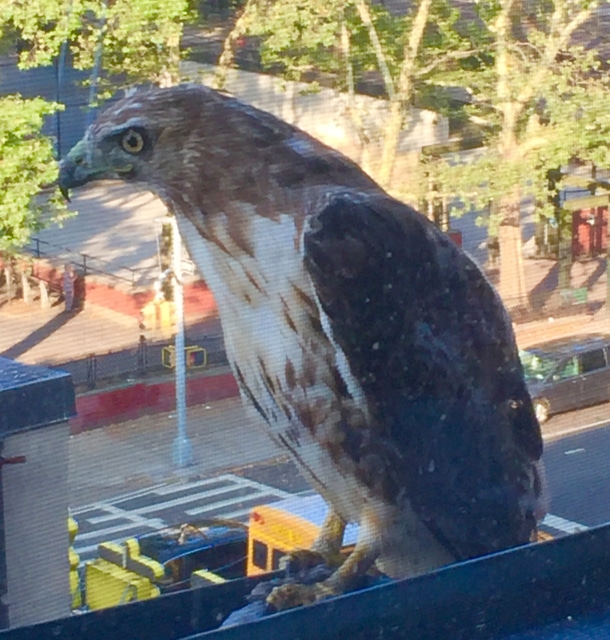
Yet another reason to use the dry ice method to remove rats in the park! Our bird caregiver has reported dead and dying birds who we believe have had contact with the lethal poisons currently used to kill rodents.
All agree. Not good for the environment. And not only during NYC’s ban during the hawks breeding season: March – August! See the excellent Patch article on the death of a Red Tailed Hawk from rodenticide in SDR Park in January.
A spokesman for NYC Audubon: “We advocate against the use of rodenticides in all places in the City, especially parks.”
More on Red Tails from NYC WildlifeNYC Website:
Coexisting with Red-Tailed Hawks in NYC
Sources:
Cornell Lab or Ornithology (2015). All About Birds. Retrieved from
https://www.allaboutbirds.org/guide/Red-tailed_Hawk/lifehistory
The National Audubon Society (2016). Fearless and Well-Fed, New York City’s Red-
Tailed Hawks Are Flourishing. Retrieved fromhttp://www.audubon.org/news/fearless-and-well-fed-new-york-citys-red-tailed-hawks-are-flourishing